

Tree stand placement for deer hunting is very important; it can not be overstated. The correct placement of tree stands can be the difference between a successful big buck hunt and a mediocre one. Maximize deer hunting success by placing tree stands strategically along natural deer paths.
In this article, we discuss tree stand placement for deer hunting to help you properly place tree stands for successful hunts of mature bucks.

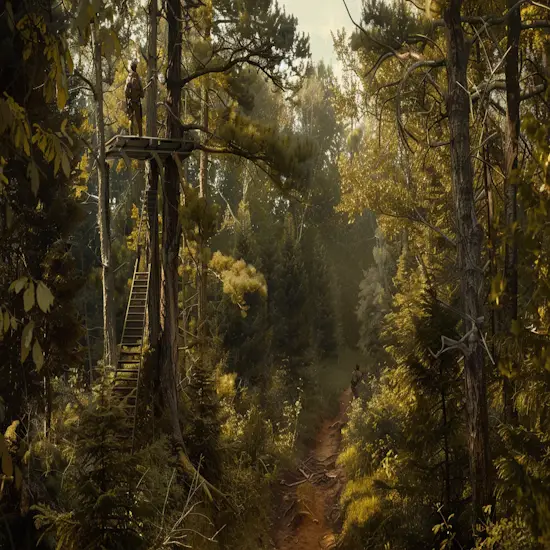
Table of Contents
- 1 Key Takeaways
- 2 Travel Corridors for Stand Placement
- 3 Mapping for Stand Selection
- 4 Air Current Considerations
- 5 Area Modification Strategies
- 6 Timing Your Stand Setup
- 7 Location Tips for Tree Stands
- 8 Importance of Access Routes
- 9 Understanding Foliage for Placement
- 10 Seasonal Considerations
- 11 Types of Stands & Access Techniques
- 12 The Bottom Line
Key Takeaways
- Consider deer travel routes and terrain features for stand placement.
- Position stands downwind along natural funnels and pinch points.
- Utilize wind direction and thermal currents to minimize scent detection.
- Clear shooting lanes, adjust stand height and use cover for ambush effectiveness.
- Strategically choose stand locations based on visibility, concealment, and deer movement patterns.
Travel Corridors for Stand Placement
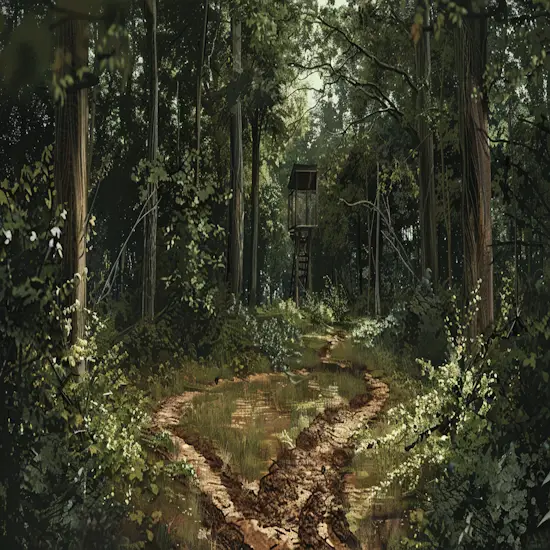
When setting up your hunting tree stand, consider the terrain-based travel patterns of deer. Aim to position yourself where they naturally move.
Strategically place your stand to take advantage of the best wind positioning. Ensure your scent doesn’t give away your location. Additionally, gain insights into connecting areas where deer are likely to pass through for the best chance of taking down mature bucks.
Terrain-Based Travel Patterns
Utilize terrain-based travel patterns to pinpoint strategic travel corridors for ideal deer stand placement during your hunting excursions. By understanding how deer move through different terrains, you can identify key routes they use for travel.
Keep an eye out for natural features like ridgelines, valleys, or water sources that funnel deer movement. Areas between different types of terrain, such as fields to forests, are prime tree stand locations. Trails that deer create along these terrain features are likely travel corridors where you can intercept them.
Observing and adapting to terrain-based travel patterns can greatly increase your chances of a successful hunt. Choose stand placements that capitalize on these natural routes to maximize your hunting opportunities.
Optimal Wind Positioning
For peak deer hunting success through treestand setups, prioritize positioning yourself downwind along travel corridors to capitalize on deer movement patterns. By placing yourself strategically, you increase your chances of encountering deer as they naturally move through the area during deer season.
Travel corridors serve as pathways for deer to navigate their surroundings, making them ideal spots for stand placement. By aligning yourself downwind, you reduce the chances of deer detecting your scent, increasing the likelihood of a successful hunt.
Understanding the terrain and recognizing these travel corridors is essential for maximizing your hunting opportunities. Always take advantage of the wind direction and deer behavior to enhance your hunting experience and increase your chances of a mature whitetail hunt.
Transition Area Insights
Shift areas, pivotal for successful deer hunting, offer key insights into travel corridors ideal for stand placement. Shift zones between bedding and feeding areas are prime spots for setting up stands. Look for fences, creeks, or changes in vegetation that funnel deer movement.
These areas create natural travel corridors that deer frequent. Setting up near these shift zones increases your chances of encountering deer as they move between their core areas. By understanding and utilizing these shift areas, you position yourself for successful hunts.
Take advantage of these travel corridors to strategically place your stand where deer are likely to pass through, enhancing your opportunities for a successful harvest.
Mapping for Stand Selection
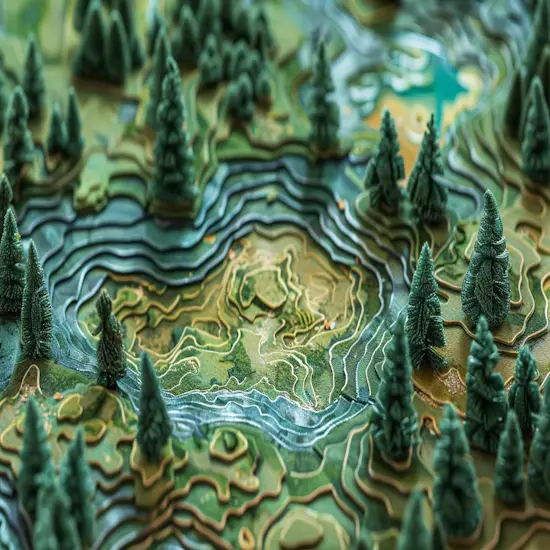
When mapping for stand selection, remember to:
- Map terrain features.
- Identify travel corridors.
- Consider wind patterns.
Mapping out these elements will help you strategically place your tree stand for the best hunting success. Make sure to pay attention to these key points to increase your chances of a successful deer hunting experience.
Map Terrain Features
To optimize your deer hunting success, focus on mapping terrain features for selecting the best stand locations. Study the lay of the land to identify natural funnels, ridges, valleys, and water sources that deer frequent.
Look for areas where different types of terrain meet, as these junctures often create prime hunting spots. Pay attention to elevation changes, as deer tend to follow contours in the landscape.
Consider how wind and thermal currents interact with the terrain, affecting scent dispersal and deer movement patterns. By mapping out these terrain features, you can strategically place your tree stand in locations that increase your chances of encountering deer.
Identify Travel Corridors
Identify the main routes deer follow through the terrain to strategically map out best stand locations for hunting success. Deer tend to travel along paths of least resistance, such as ridgelines, creek beds, or field edges.
Look for signs like tracks, droppings, or worn trails to pinpoint these travel corridors. By understanding where deer move, you can position your stands along these routes to increase your chances of spotting and harvesting deer.
Mapping out these travel corridors will help you plan your hunting strategy effectively and improve your overall success in the field. Pay close attention to these natural pathways to set yourself up for a fruitful hunting experience.
Consider Wind Patterns
For a successful tree stand placement for deer hunting, understanding wind patterns is key when mapping out stand selection. Consider how the wind moves through the hunting area to prevent your scent from reaching the deer. Choose stand locations that allow you to approach without alerting deer, using the wind to your advantage. Pay attention to swirling winds and thermal currents that can carry your scent.
Mapping out stand placement based on wind patterns can increase your chances of a successful hunt. Utilize tools like onX to track wind direction and optimize stand locations. By factoring in wind patterns, you enhance your stealth and minimize the risk of detection, making your hunting experience more effective.
Air Current Considerations
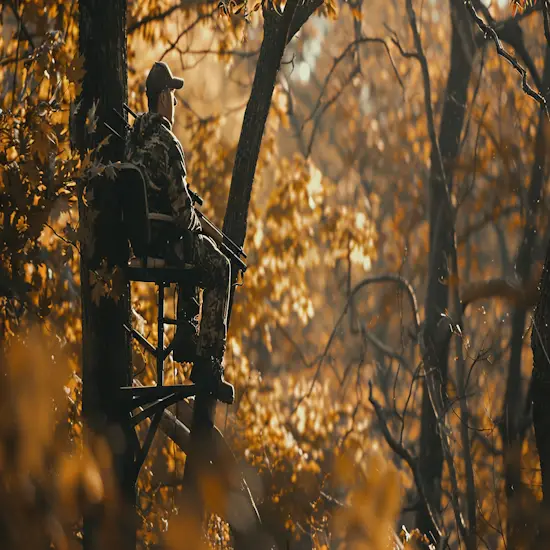
When setting up your deer stand, remember that air currents play an essential role in your hunting success. Understanding the importance of wind direction, implementing effective scent control strategies, and being aware of how thermal currents can impact your hunt are key considerations.
Wind Direction Importance
Understanding wind direction is vital for successful deer hunting, especially when considering air current dynamics. Wind plays an essential role in carrying your scent away from deer, preventing detection. When approaching your deer stand, always be mindful of the prevailing wind direction.
Scent travels with the wind, potentially alerting deer to your presence. To minimize scent dispersion, choose the path with the wind blowing from the deer towards you. This way, deer won’t catch your scent before you have a chance to take a shot.
Scent Control Strategies
To enhance your hunting success, focus on managing scent control strategies with consideration for air currents. When it comes to scent control, understanding how air currents move is essential for staying undetected by deer. Here are five key strategies to help you control your scent effectively:
- Position your stand downwind from where you anticipate deer movement.
- Use scent-elimination products like sprays and detergents on your hunting gear.
- Be mindful of your scent and avoid contaminating the area around your stand.
- Take advantage of wind-detection devices to monitor air currents constantly.
- Plan your approach to the stand carefully, considering wind direction to minimize scent dispersion.
Thermal Current Impact
For successful deer hunting, being mindful of thermal currents and their impact on air movement is crucial. Understanding how these currents affect the way scents travel can make a significant difference in your hunting success. During the day, the sun heats the earth, causing warm air to rise and creating thermal currents that carry scents upward.
In the evening, as the earth cools, air currents shift, potentially carrying your scent toward deer. By positioning your tree stand with these thermal currents in mind, you can better control your scent dispersion and increase your chances of staying undetected by deer. Utilize the changing air movements to your advantage by adapting your hunting strategies accordingly.
Area Modification Strategies
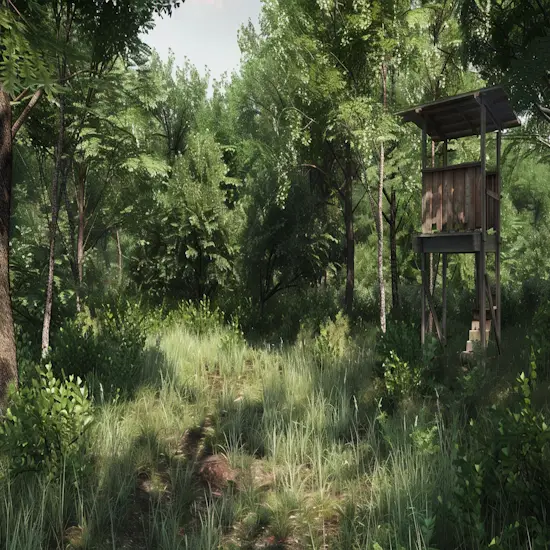
When enhancing your hunting area, focus on modifying ambush locations, enhancing shot opportunities, and improving the overall hunting environment. Adding features like food plots, mast trees, and signposts with scents can attract deer for better hunting opportunities.
Modify Ambush Locations
Enhance hunting opportunities by adapting and modifying your ambush locations strategically.
- Clear Shooting Lanes: Trim branches or vegetation obstructing your shot.
- Create Cover: Add a natural or artificial cover to blend with the surroundings.
- Adjust Stand Height: Find the best height for better visibility and shot angles.
- Use Decoys or Scents: Attract deer to specific areas for improved shot opportunities.
- Employ Calls: Lure deer closer for a perfect shot opportunity.
Enhance Shot Opportunities
To improve your chances of a successful shot, consider modifying the hunting area strategically for better shot opportunities. Enhance your shot opportunities by clearing shooting lanes and removing obstacles that could obstruct your view or shot.
Trim branches at different heights to create clear lines of sight for various shot angles. Additionally, consider setting up your tree stand in areas with natural funnels or pinch points that funnel deer movement toward your shooting lane.
Improve Hunting Area
Consider modifying your hunting area strategically to enhance your shot opportunities by clearing shooting lanes and removing obstacles.
- Clear shooting lanes to improve visibility and increase shot chances.
- Remove obstacles like fallen trees or thick brush that may obstruct your view.
- Create mock scrapes and licking branches to attract deer to specific areas.
- Plant food plots or mast trees to draw deer closer to your hunting spot.
- Establish trails that guide deer movement toward your stand location.
Timing Your Stand Setup
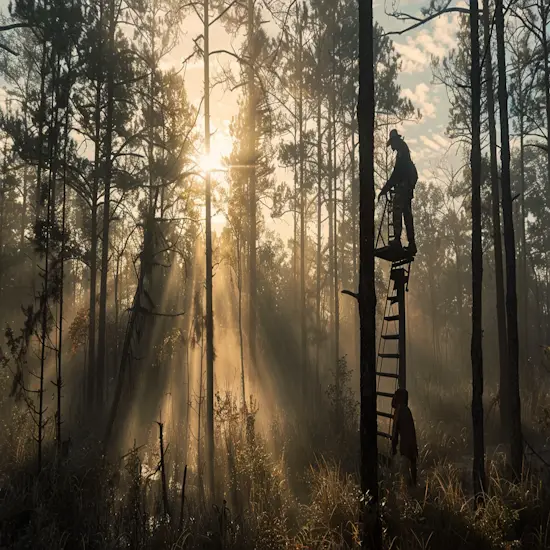
When setting up your deer stand, timing is essential for the best success. Make sure to strategically prepare your stand setup to align with the most suitable timing considerations.
Optimal Setup Timing
For best results in setting up your deer stand, timing is essential. When it comes to the ideal setup timing, here are some key points to keep in mind:
- Early Preparation: Setting up your stand well in advance allows deer to acclimate to its presence.
- Avoid Disturbance: Refrain from frequent visits to the stand location to minimize disruption.
- Take into account Seasonal Changes: Account for shifts in deer behavior due to changing seasons.
- Weather Awareness: Choose a day with favorable weather conditions for setting up your stand.
- Silent Setup: Execute the setup quietly to avoid spooking deer in the area.
Strategic Stand Preparation
To time your deer stand set up strategically, make sure you set up well in advance to allow deer to acclimate and minimize disruptions. By preparing early, deer become accustomed to the new structure, reducing the chance of spooking them on your hunt.
Setting up early also lets you make necessary adjustments without rushing. This advanced preparation gives you the advantage of observing deer patterns and behaviors in the area before hunting season begins. It allows you to fine-tune your stand placement for maximum effectiveness.
Timing Considerations for Stands
Start your deer stand setup with careful consideration of the best timing to maximize your hunting success.
- Assess the Season: Understand the hunting season to align tree selection with deer behavior.
- Evaluate Environmental Factors: Consider wind patterns, food sources, and cover when choosing the timing.
- Monitor Deer Movement: Study deer behavior to anticipate the best time for stand setup.
- Avoid Disturbing the Area: Set up stands without alerting deer to your presence.
- Adapt to Changing Conditions: Be flexible with timing based on weather and deer activity.
Location Tips for Tree Stands
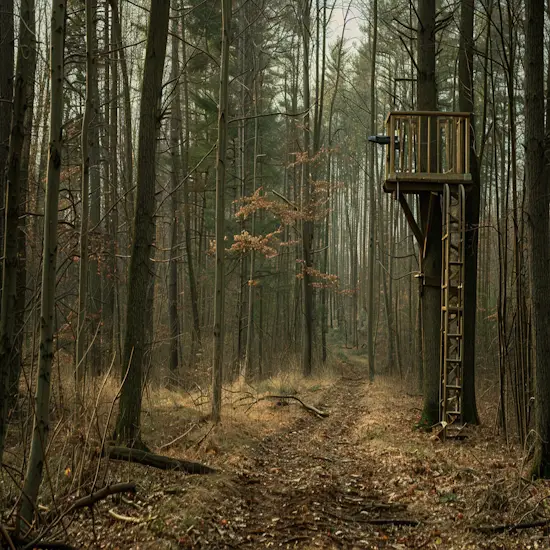
When setting up your tree stand, remember to think about the best height for improved visibility, perfect shot distance, terrain features, and cover for concealment. Make sure to factor in how wind direction can impact your hunting success. Adjust your strategy based on these key elements to enhance your chances of a successful hunt.
Ideal Tree Stand Height
Consider selecting tree stand heights around 20-25 feet for balanced visibility and ideal shot range while hunting deer.
- Position your tree stand at a height that guarantees a clear view of your surroundings.
- Confirm the height allows for a comfortable shooting angle and distance.
- Adapt the height based on the terrain and cover in your hunting area.
- Higher stands may offer better visibility but could compromise shot accuracy.
- Lower stands provide a more stable shooting platform but limit your field of view.
Optimal Shot Distance
To ensure a successful hunt, position your tree stand at a height that maximizes shot distance while maintaining a clear view of your surroundings. Finding the right balance is pivotal.
By placing your stand at an ideal height of around 20-25 feet, you create a balance between visibility and the kill zone. This height allows for better vantage points and shooting lanes, increasing your chances of a successful shot.
Consider the terrain, deer behavior, and your comfort when selecting the height. Remember, the goal is to have a clear shot while staying hidden and undetected.
Terrain and Cover Considerations
Choosing the right tree stand location depends on analyzing the terrain and cover available in the hunting area. Consider these tips for ideal placement:
- Look for natural funnels or pinch points that channel deer movement.
- Choose trees that provide adequate cover while still offering clear shooting lanes.
- Take advantage of elevation changes to enhance visibility and concealment.
- Avoid setting up near dense foliage that could obstruct your view or shot.
- Position your stand with the sun at your back to reduce the chances of being spotted by deer.
Importance of Access Routes
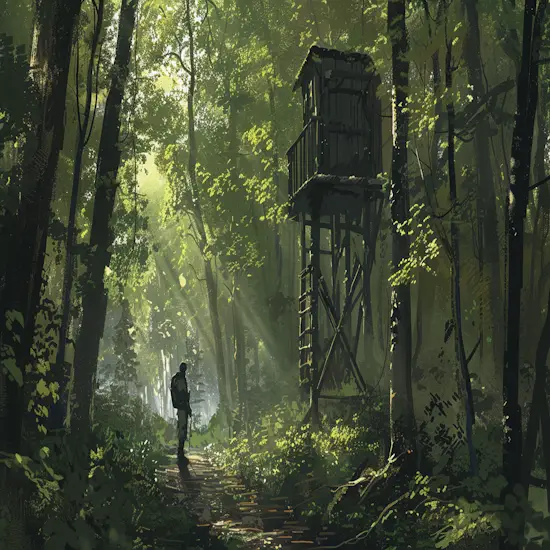
When heading to your deer stand, focus on stealthy approaches, minimizing scent trails, and strategically selecting your path. Make sure to contemplate wind direction to control your scent effectively. Choose the lowest ground for a quiet approach and avoid startling deer with sudden movements.
Stealthy Approach Routes
To guarantee covert approaches for top hunting success, prioritize planning tactical access routes to your deer stand location. When it comes to stealthy approach routes, here are some key tips to keep in mind:
- Utilize natural terrain features for concealment.
- Choose paths that minimize noise and disturbance.
- Avoid crossing open areas or dense vegetation that could alert deer.
- Plan multiple access routes to your stand to adapt to changing wind conditions.
- Always approach your stand with the wind in your favor for scent control.
Minimizing Scent Trails
Minimize scent trails by planning strategic access routes to your deer stand location for best hunting success. Choose paths that avoid walking along game trails or across fields to minimize your scent being detected by deer.
Access your stand from the lowest ground possible for stealth and consider the wind direction throughout your approach. Slow down to prevent alerting deer with sudden movements and be mindful of minimizing your scent trail.
Strategic Path Selection
Select the most discreet and stealthy paths to access your deer stand location, ensuring peak hunting success by minimizing your scent trails and avoiding common deer detection routes.
- Choose paths that are downwind from common deer travel areas.
- Utilize natural terrain features like ridges or dense vegetation for concealment.
- Walk slowly and quietly to reduce noise and disturbances along the way.
- Be mindful of your surroundings and avoid stepping on twigs or crunchy leaves.
- Plan your access route carefully to minimize disturbance to the hunting area.
Understanding Foliage for Placement
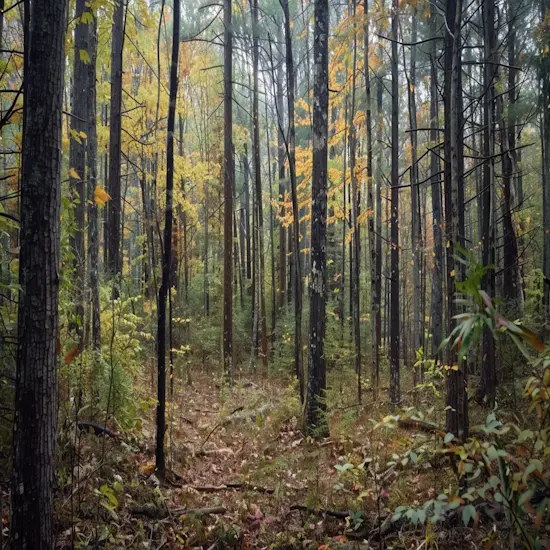
When selecting a tree for your deer stand, you need to evaluate the challenges posed by summer foliage. Evaluate the density of the foliage to determine shooting lanes and cover options. Understanding how different tree types retain foliage can impact your hunting strategy.
Summer Foliage Challenges
Moving through the challenges presented by summer foliage when choosing a tree stand location for hunting can greatly influence your success in the field. When dealing with summer foliage, keep these points in mind:
- Assess Density: Determine the thickness of the foliage for shooting lanes and cover.
- Identify Tree Types: Understand how different trees retain leaves to anticipate changes.
- Consider Year-Round Foliage: Conifers, mountain laurels, and rhododendrons maintain foliage.
- Impact on Movement: Foliage affects not only cover but also deer movement and perceptions.
- Plan Carefully: Visualize the tree from hunting height and take time to select the right spot for a successful hunt.
Tree Type Impact
Understanding how different tree types impact foliage density is essential for strategic tree stand placement in hunting scenarios.
Summer foliage thickness can pose challenges for selecting the right tree. Consider using summer density to evaluate potential shooting lanes and cover options.
Tree types like beech and oak retain leaves longer, affecting visibility and concealment. On the other hand, conifers, mountain laurel, and rhododendron maintain foliage year-round, offering consistent cover.
Remember that foliage not only influences cover but also impacts deer movement and their sense of safety. By recognizing these variations in tree types, you can better anticipate changes in foliage density throughout the hunting season, ultimately improving your chances of a successful hunt.
Visualizing Hunt Scenario
To visualize the hunting scenario effectively, assess the chosen tree from a ground-to-tree perspective to guarantee perfect placement for successful hunts. When understanding foliage for placement, consider the following:
- Summer foliage thickness affects shooting lanes and cover.
- Use foliage density to assess shooting options.
- Differentiate tree types for foliage changes.
- Conifers and evergreens maintain foliage year-round.
- Ground-to-tree perspectives are essential for accurate assessment.
Seasonal Considerations
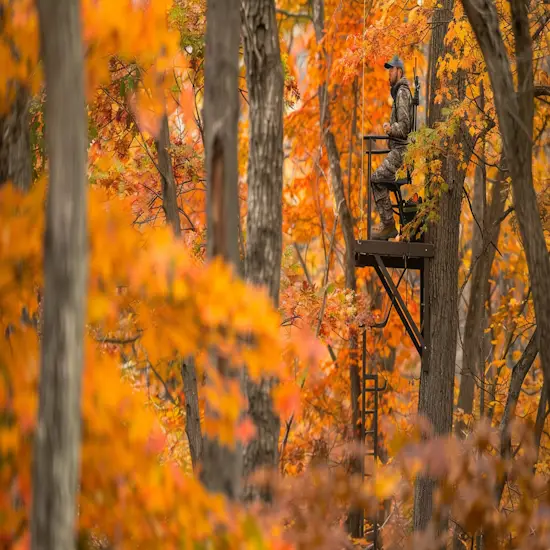
When hunting, you should pay attention to seasonal deer movement patterns. Consider how weather conditions can impact deer behavior and adjust your stand locations accordingly. Being aware of these factors can greatly increase your chances of a successful hunt.
Seasonal Deer Movement
For successful deer hunting during different seasons, contemplate the movement patterns of deer about environmental changes such as food availability and weather conditions. Understanding when and where deer are most active can greatly enhance your chances of a successful hunt. Here are some key points to ponder:
- The deer movement is influenced by food availability and quality.
- Breeding seasons can impact deer activity and movement patterns.
- Weather conditions such as temperature and precipitation affect deer movement.
- Hunting pressure can alter deer behavior and movement.
- Shift periods between seasons can lead to changes in deer movement patterns.
Impact of Weather
Experiencing changes in weather conditions throughout the hunting season can greatly impact deer movement patterns and hunting success.
In the early season, warm weather might keep deer bedded during the day, making early mornings and late evenings prime hunting times.
As fall progresses, cooler temperatures and approaching storms can trigger increased deer activity, especially right before or after inclement weather. Snowfall can make tracking easier but may also push deer to feed more actively.
Wind direction and speed play an important role in deer movement, affecting how they use cover and navigate their surroundings.
Being aware of these weather patterns and adjusting your hunting strategies accordingly can significantly enhance your chances of a successful hunt.
Adjusting Stand Locations
Adapting stand locations based on seasonal considerations involves evaluating deer behavior changes and adjusting your hunting strategy accordingly. As the seasons shift, keep these points in mind:
- Monitor deer movement patterns for seasonal shifts.
- Adjust stand locations based on food source changes.
- Consider rutting behavior and adjust stand positions accordingly.
- Pay attention to temperature changes and their impact on deer activity.
- Move stands to locations with better cover during harsh weather conditions.
Types of Stands & Access Techniques
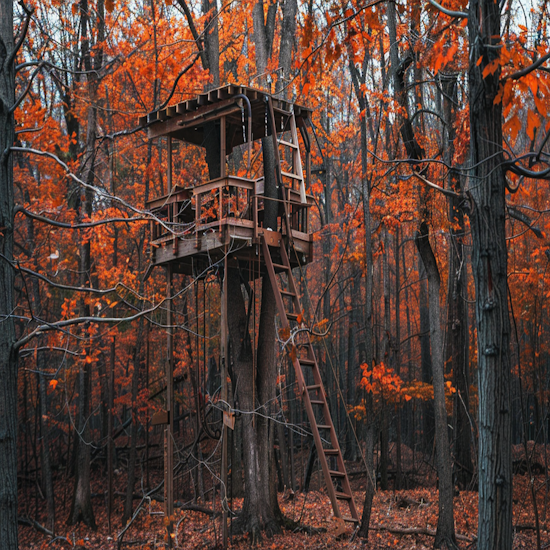
When establishing your tree stand, it’s essential to think about the varieties of stands available, how to access them safely, and the height considerations for ideal hunting.
Make sure to pay attention to the wind direction and choose trees that offer good cover and concealment. These factors will help you maximize your chances of a successful deer hunting experience.
Stand Types Overview
To understand the effectiveness of different types of tree stands and access techniques, it’s essential to grasp the unique advantages and considerations each stand offers.
- Ladder stands provide a stable platform for longer hunting periods.
- Tripod stands offer flexibility in setup and mobility.
- Climbing stands allow for easy adjustment based on tree selection.
- Hang-on stands are lightweight and versatile for various tree types.
- Utilize tree stand types based on terrain, cover, and hunting scenarios.
Accessing Stands Safely
Choose the right type of tree stand and master safe access techniques for a successful hunting experience. When accessing your stand, consider the wind direction for scent control. Approach from the lowest ground possible to remain stealthy and avoid walking along game trails or across fields to minimize scent.
Remember to slow down to prevent alerting deer with sudden movements and be mindful of wind direction throughout your approach. Utilize the onX Hunt App to plan and hang tree stands efficiently, marking stands with colored waypoints for different wind directions or hunt times. Reference waypoints for pre-season bow shooting practice and optimize stand placement for hunting success.
| Safe Access Techniques | Benefits |
|---|---|
| Approach from low ground | Stealthiness |
| Walk away from game trails | Minimize Scent |
| Slow down movements | Prevent alerting deer |
| Use onX Hunt App | Efficient Planning |
Stand Height Considerations
For ideal tree stand placement, consider the height of the stand about the surrounding terrain and cover. When setting up your stand, keep these tips in mind:
- Select a height that provides a clear line of sight.
- Guarantee the stand height allows for a comfortable shooting position.
- Consider the cover provided by the tree at different heights.
- Adjust the stand height based on the hunting season and expected deer movement.
- Aim for a balance between visibility and staying concealed.
Tree Selection Tips
When selecting tree stands for deer hunting, consider the type of stand that best suits your hunting style and the terrain you’ll be hunting in.
- Choose stands that match your hunting style and the landscape.
- Adapt your tactics based on the terrain and hunting conditions.
- Consider the advantages and disadvantages of each stand type.
- Adjust stand placement for best visibility and shot opportunities.
- Make sure your stands offer the right balance of concealment and shooting lanes.
Visibility and Concealment
When selecting tree stands for deer hunting, ensure your stands offer outstanding visibility and efficient concealment for successful hunting. Ensuring you have a clear line of sight while also staying hidden from the deer is vital. Below is a table highlighting different types of stands and their visibility and concealment aspects:
| Type of Stand | Visibility | Concealment |
|---|---|---|
| Ladder Stand | Good | High |
| Tripod Stand | Moderate | Moderate |
| Climbing Stand | Excellent | Low |
Choosing the right stand based on your hunting area’s terrain, cover, and season can have a profound impact on your hunting success. Remember, a good balance of visibility and concealment is key for a fruitful hunting experience.
The Bottom Line
Tree stand placement for deer hunting is very important for a successful hunt. When deciding where to place your tree stand, several factors must be considered.
The terrain features, water sources, wind direction, bedding, and feeding areas are some of the factors you have to take into consideration when choosing the location of your tree stands. In this article, we shared information to help you place your tree stand at the best possible sites for a successful deer hunt,
If you hunt deer in different terrains, you can read about deer hunting in various terrains to get more information and tips to be successful hunting deer in different landscapes. Additionally, you can also learn how to hunt deer in different seasons by reading about deer hunting in different seasons. Moreover, you can also enhance your tracking and scouting deer skills by reading this article.